The Great Sphinx Kerfuffle
Don’t you love a good dust-up between the branches of science? Few things are more worthy of hot buttered popcorn than watching dendrochronologists and paleoclimatologists, for instance, march into the fray with glasses shined and papers flying
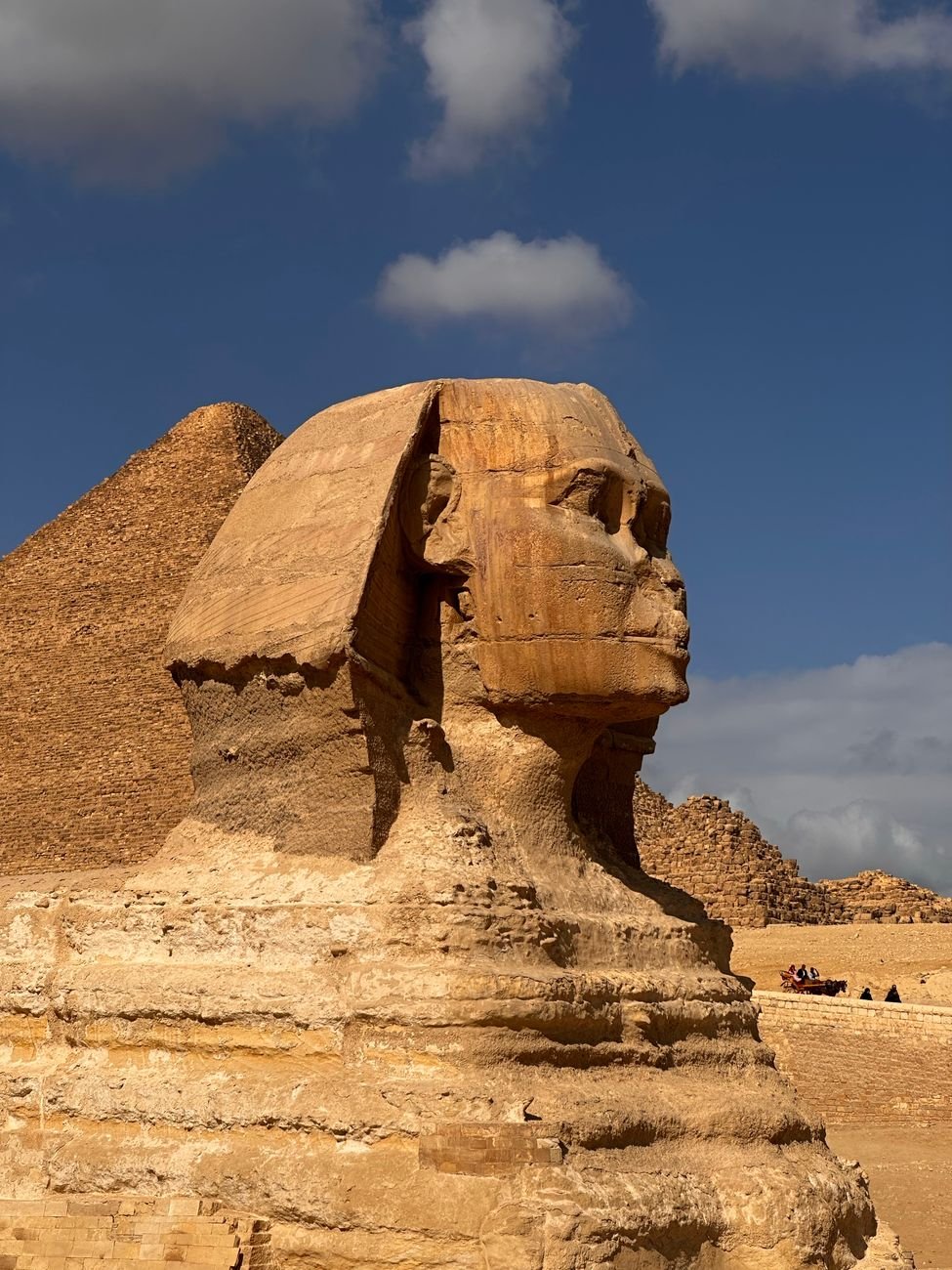
Recently, I’ve been reading up on a long-standing kerfuffle between a geologist and the Egyptologists regarding the Sphinx.
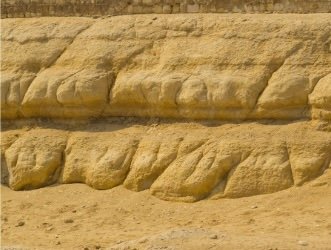
In the 1980s, a man named John Anthony West took a good look at the sphinx and decided that the unusual weathering of its limestone was caused by heavy, prolonged rainfall, not by wind and sand. However, being wholly without the necessary initials after his name, nobody (much) cared. Until he convinced Yale graduate Robert Schoch, B.A., B.S., PhD., MS.
That’s when things got interesting. You see, there is no inscription or record of the Sphinx’s origin, leaving it vulnerable to Cool Theories. And this was one cool theory.
Robert Schoch (B.A., B.S., etc.) not only agreed, but he presented his findings to a conglomerate, which, in case you’ve lived under a rock, is the correct term for a group or gathering of geologists. Most of them were impressed, some convinced. Why couldn’t the Sphinx be much older than anyone had thought? Obvs. those weathering marks, all vertical and rounded, like the folds of a curtain, were caused by heavy rainfall. No real question. Jolly good show, and all that!
When a dusting of Egyptologists (dusting is the ‘noun of assemblage’ for Egyptologists) heard that so many geologists appeared to have cheerfully accepted a claim that would turn all of their nice, settled theories on their heads, they were outraged.
Claims went flying.
Newspaper columns were written, and innocent ink was spilt.
What of all the carefully ordered dynasties? When does heavy rainfall occur in Egypt? How dare geologists, or at least one geologist (MS., PhD., etc.) infringe on their territory?[1]
As tempers boiled, no one thought to wake the dribble of karstologists from their hole.
It did not take long for the dusting (of Egyptologists) to discover that John Anthony West had a wide and varied field of interests. West spoke of Atlantis, and listened to stories about aliens and space-travelers. He gave countenance to theories slighted by other old men. He wrote science fiction. Need I say more? Besides, he had absolutely no initials at all. So much for his theory!
And yet, the rumors grew. In 1993, West filmed a documentary hosted by Charlton Heston (there’s respectability for you!) with computer animation, (gasp!), and more than one scientist (PhD., MS., etc.), describing these noxious new ideas.
The general public was intrigued.
The beleaguered Egyptologists cried in vain that for the Sphinx to be created during the Ice Age, an advanced civilization would have had to appear from nowhere, build a Sphinx, toss a pile of 100 ton blocks of stone into a temple—a difficult feat in any time—and then…disappear. For five thousand years, give or take, before another civilization was born in the same place with the same aesthetics. (Of course, the buildings in Washington, D.C. follow the aesthetics of a civilization thousands of years and miles away.)
Two items of note in this struggle, because the dribble of karsologists still aren’t saying much.[2]
First, let us be honest. The sphinx’s head is impossibly small for its body, and if its face is enigmatic, that’s because it’s smirking in embarrassment. Either the head has been damaged by weathering and re-carved multiple times, or this was the one instance when the Egyptians forgot what the word “proportion” meant.
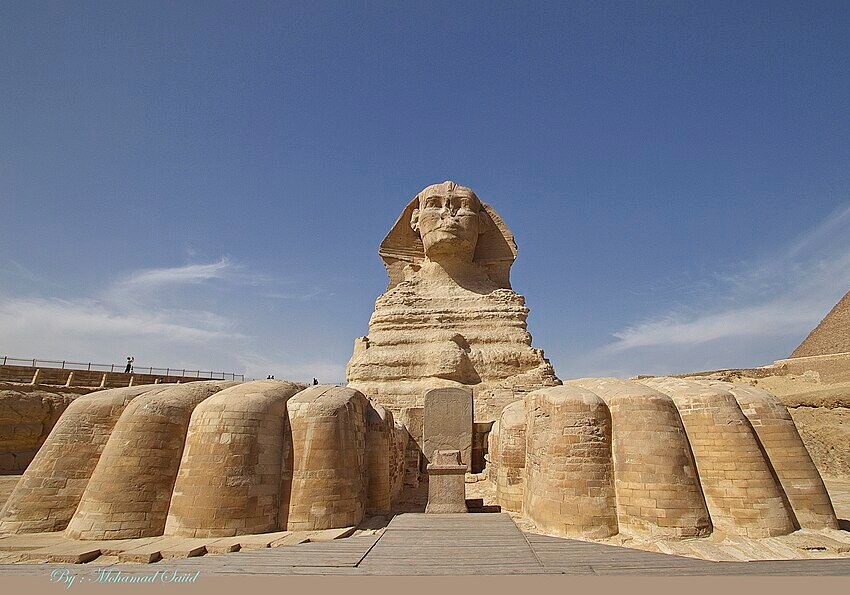
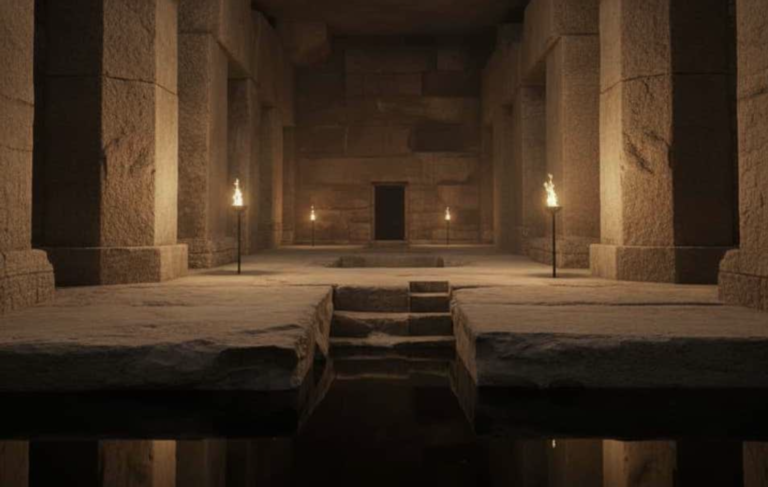
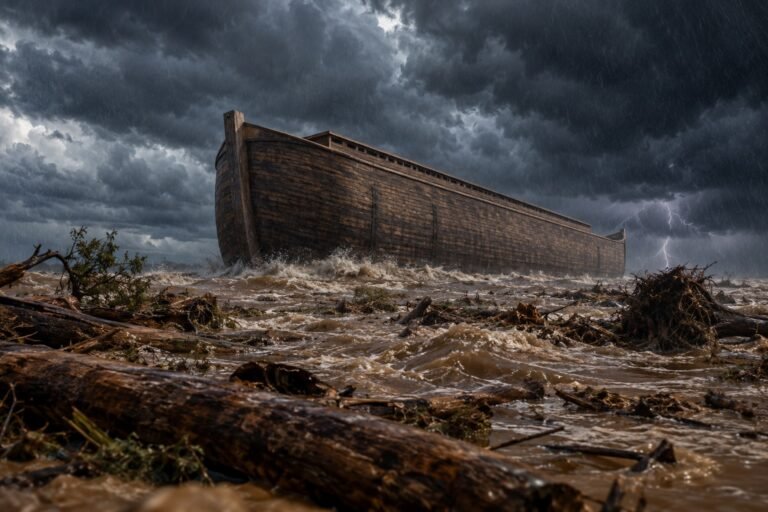
Technically, Noah’s grandson, Mizraim, who founded Egypt, could have carved the original Sphinx’s head. After all, he probably became the “god” Osiris, and may have been involved in the Osierion, an ancient structure that shares much in common with the Sphinx temple, and may date to the Ice Age. Food for thought.
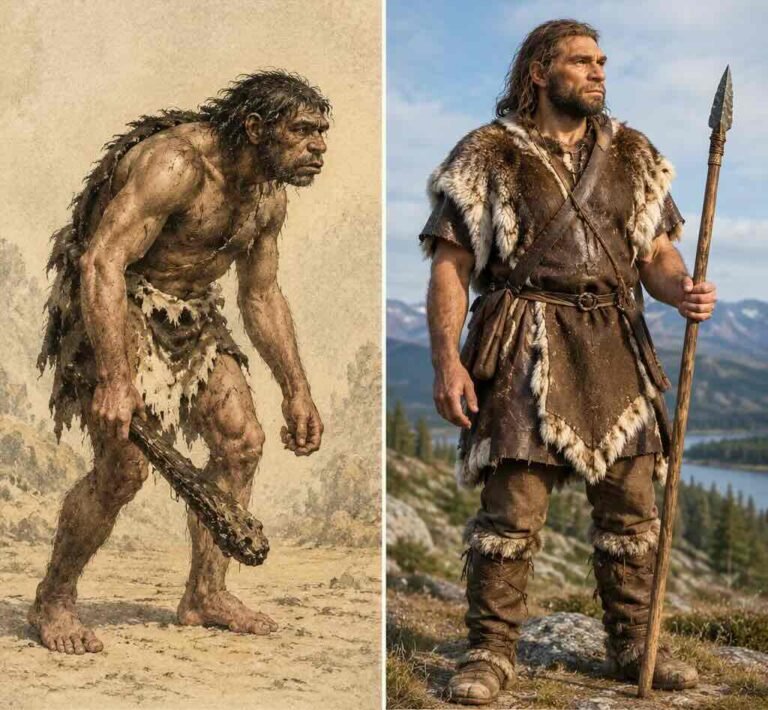
In the end, the story of the history of the Sphinx is haunted by the same ghosts that trouble the theory of molecules to man evolution. We weren’t there when the Sphinx was built. We cannot recreate it or the weather it endured—but good science relies on what we can test, retest, measure, and test again.
History may repeat itself, but it never does so in a lab. This leaves us free to argue the origin of the Sphinx, the Paleozoic, and the hamburger until our souls are plump with superiority. Nothing can actually prove us wrong except, of course, the written testimony of the Maker.
But even then, we can choose to ignore it.
[1] The best objection an older Sphinx, and the explanations and arguments against it, revolve around a certain foundation wall. You can find more information here.
[2] Except that one karstologist, who believes that the Sphinx eroded…under the sand. Of course, to prove or deny his theories, we would need to know more about the composition of the sand that covered the sphinx’s body, the acidity of the rain, etc. etc. And how boring would that be?