Osireion: The Subterranean Temple at Abydos
Some people say the Osireion, a subterranean temple at Abydos in Egypt, is the the oldest building in Egypt. It could even date to the Ice Age.
Of course some people claim a lot of things.
They also say its mysterious waters of the Osireion can improve your eyesight, heal your body, and give you a mystic connection to ancient nasties from the spiritual realm who are crabby from being ignored for the past two millennia.
But is the Osireion the oldest building on earth?
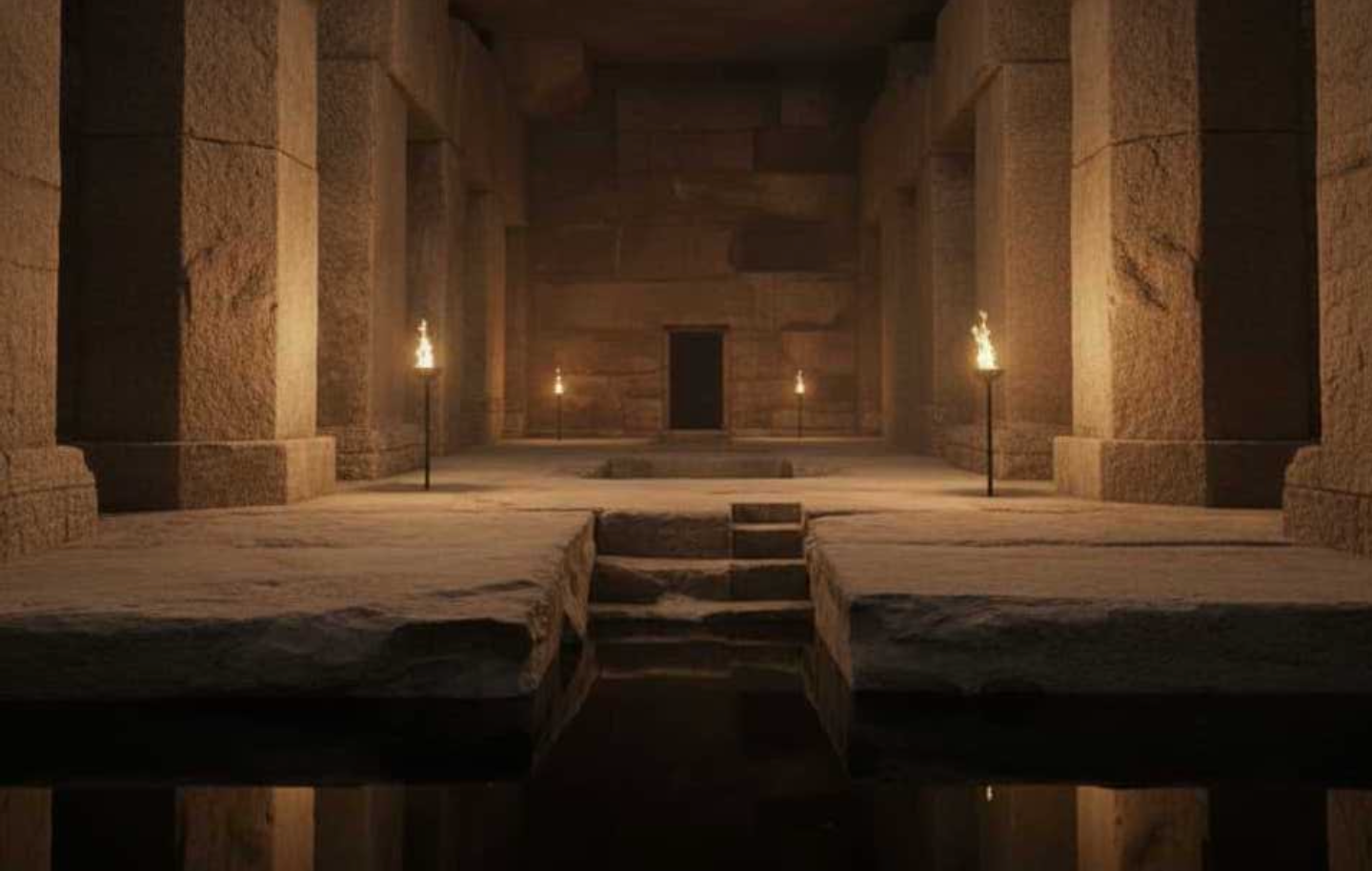
Let me take you on a tour of the Osireon as it stood over three thousand years ago. We’ll have to bypass the only entrance, which was bricked up by Seti I around 1290 BC, but that shouldn’t bother you. It didn’t stop his grandson, Merneptah, from sending a small herd of scribes into the structure with hammers and paint, on a mission to chisel away Seti I’s signature wherever they found it and replace it with his own.
Starting by the bricked up entrance, we pass down a dark, tunnel that smells like old algae, past walls inscribed with scenes from the sun god’s nightly journey through the underworld. (It’s supposed to be a hint, I think, of what you’re about to experience, and not a very subtle one.) We can’t see the end of the tunnel by the light of our flashlights. It stretches, echoing, for almost 300 feet—long enough to make a few nervous jokes—before we make an abrupt left turn into darkness.
Watch your step now, this next chamber slopes sharply downward and the angle can be disorienting in the semi-darkness. See those paintings overhead—the woman covered in stars, and those groups of figures? They represent minor constellations, and they show the night sky as it looked during the time of Joseph*, some 600 years before this chamber was built by Seti I.
Could Joseph, or his father Jacob, have brought advanced astronomy to Egypt?
The smell of algae and mud is getting stronger, but we have one more room to explore before the big reveal—and here it is. At the bottom of the sloping corridor, the floor levels and the walls open on either side to form one long room that would comfortably fit two boxcars, one to your right, the other to your left. The room is decorated with passages from the Book of the Dead, but it’s hard to pay much attention, once you’ve noticed the black water ahead.
And here we stop, confronted by a moat.
Shining our wimpy flashlights over the water, we can make out a rectangular courtyard that rises from the moat like an island. Two lines of massive rectangular pillars march across its surface, holding up the stone roof. There’s no way across, unless you want to swim through the water and climb the stairs leading up the other side. See those ominous indents in the very center of the “island”? Those are our only clue to its original purpose.
The walls enclosing the moat have little cells cut into them, six in each of the side walls, three in the wall opposite, each fitted out with hollows for door-pins. And the cells in the far wall hold a secret: punch through the back of one of those, and you’ll find a hidden chamber, an exact replica of the “double boxcar” room behind you.
So much for the Osireion as it was thousands of years ago. Since then, its purpose, designer, and (for hundreds of years) even its location were forgotten. It was rediscovered in 1903.
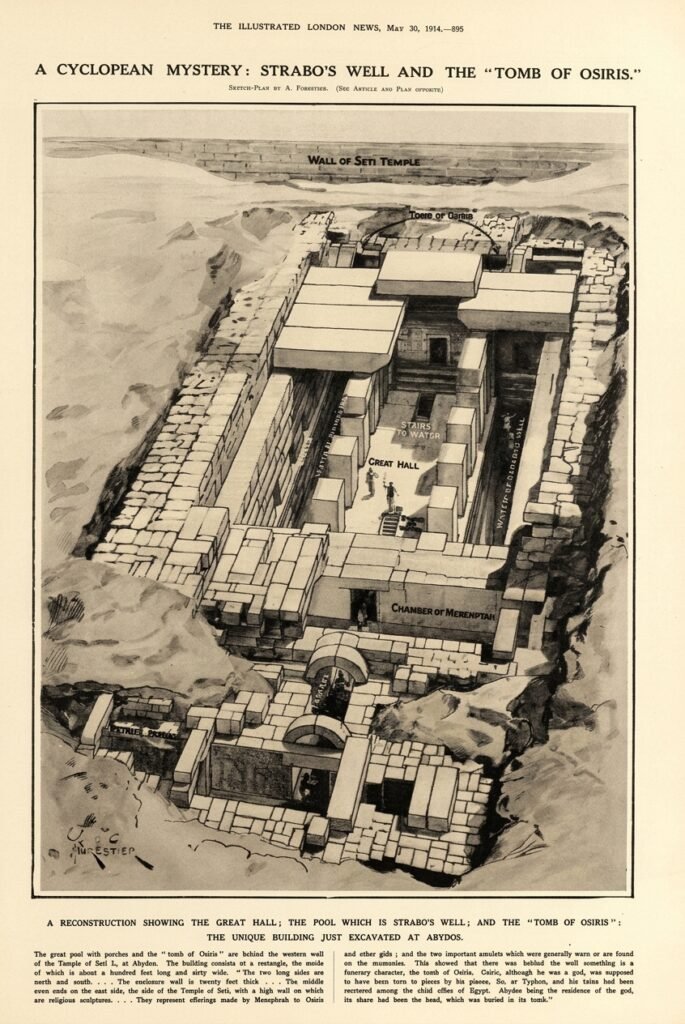
In 1933, archaeologist Henri Frankfort tried to find the bottom of the moat, which by then had filled with mud. He wrote:
We could nowhere reach the end of the walls of the canal when we pushed the probing stick (5m long) down at a slant; the walls appeared everywhere to descend below the lowest point we could reach in this way. When, on the other hand, the stick was pressed down vertically, we found everywhere that at a certain depth, 7.80m below the ledge – the water acted with particular force upon the stick, and in fact pressed it upwards, spouting up after it when it was withdrawn.1
Henri isn’t the only person to try to figure out how deep the moat is. For several decades, people have stuck longer and longer sticks down into the mud without finding the bottom.
In 2007, when Dr. Shelton Alexander, a geophysicist from Pennsylvania State University performed a seismic study at the Osirieon. He came to the conclusion that the central courtyard is about 50ft thick. That means that if you stood on the central courtyard, you would be standing on the top of a platform as tall as a five story building, sunk into ground. (See the man on the diagram below for scale.)
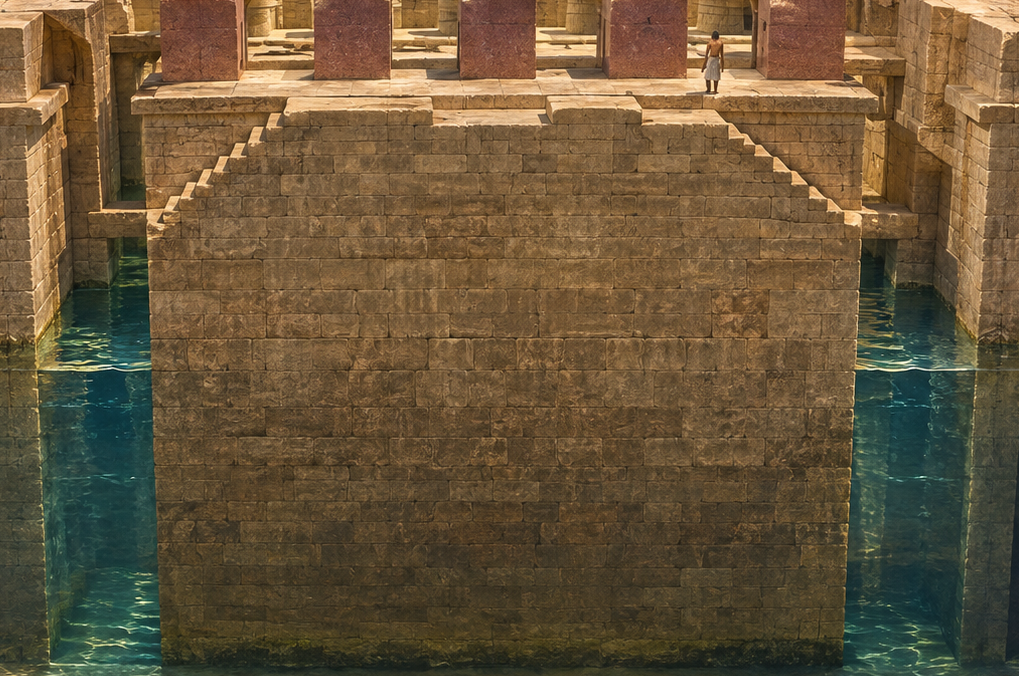
And it’s the Osireion’s central courtyard, or platform, and moat system, that some archeologists believe is the oldest building in Egypt, predating the rest of the temple structure.
Seti I commissioned the rest of the building, a fact he made obvious by slapping his signature or “cartouche” over every plain surface, like a toddler with a permanent marker. So why might the central platform be older?
The entire lower section of the building stands below the water table. And it’s downright impossible to build monolithic buildings underwater. We couldn’t do it today. Whoever laid the foundation of the Osireion had to be able to dig down 93ft below the surface to build not only the temple itself, but also its massive foundation.
Usually, when we go to build something underwater, say, the pilings of a bridge, we drop an enclosure like a giant hollow tube into the water, secure and seal it to the bottom, and then pump the water out of the enclosure, making a dry space in which to work. But the Osierion is built on an aquifer made from water saturated sand. When you dig that deep, the water gushes up out of entire surface of the ground. Building the Osierion in those conditions would be a little like trying to balance a bead on a hole in a garden hose with the water running. The only solution is to turn the water off.
The Osireion must have been built before the water table rose high enough to make the project impossible (the water table in the area has been rising measurably each century.)
This rules Seti I out. To the best of our knowledge Seti I reigned after Jospeh’s drought but before the drought in the book of Ruth, and I can’t find any calculations that put the water table low enough, without a prolonged drought, for Seti I to build it.
Here are our options:
1. Seti I built the central platform using physics-defying forces we don’t understand today.
2. The central platform and moat system is very old, perhaps from the Ice Age or even before. It could have been built by Noah’s grandson, Mizriam, the “god-king” of beer. (but why was it designed without a surrounding building?)
3. Seti I did something to change the level of the groundwater after the Osierion was built. Perhaps a subterranean canal?
Weird Items of Note:
🤔 Seti I left the Osierion unfinished, with carvings half-complete and partially dressed stones. Why would he undertake such a massive project, moving stones that weighted up to 100 tons over 200 miles, only to leave it incomplete once he’d reached the easy stage?
🤨 Once the entrance was bricked up, how did his grandson get in?
🫢 What’s with the strange tube carved into one of the platforms indents, and where is the water that flows from it coming from?
😲 Seti I’s temple (not this one. His normal, above ground, altar-for-each-god temple) is built almost on top of the Osireion. In fact, it would have been on top of the Osireion, if it hadn’t taken an abrupt 90 degree turn, becoming the one and only L shaped temple in ancient Egypt. Could its builders have discovered the Osireion and had to change plans last minute?
*According to calculations using a 430 year “long sojourn” in Egypt, on a young-earth time scale, Joseph would have been in Egypt around 1890BC.
1 The Cenotaph of Seti I at Abydos, Vol 1, 1933, pg 19
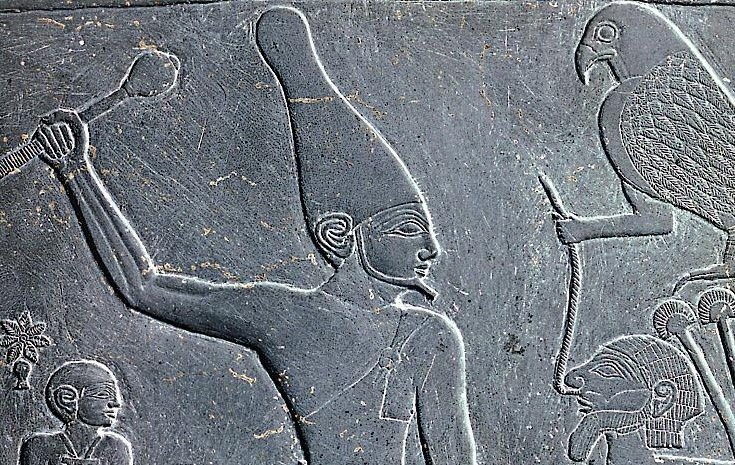
If you’re interested in more articles about ancient, ancient post-flood Egypt, check out my article about the beer-making first king of Egypt.