Before the Aztecs: Your Lost Cousins in Pre-Columbian America
We think of the United States as a new country. Even the Aztecs and Mayans didn’t really get started until after Jesus’ death and resurrection. But before the Aztecs began their rule, another people lived and flourished on this continent, nations that you (yes, you, average “white” Anglo-Saxon reader,) might be more closely related to than you think.
Before the people groups that make up modern Native Americans arrived, this continent was home to an ancient civilization. One of those glorious things with the beautiful, mysterious appellation “B.C.” preceding most of its dates. With cities, trade routes, wars, bloody coups, incredible sculptures, kindness and folly.
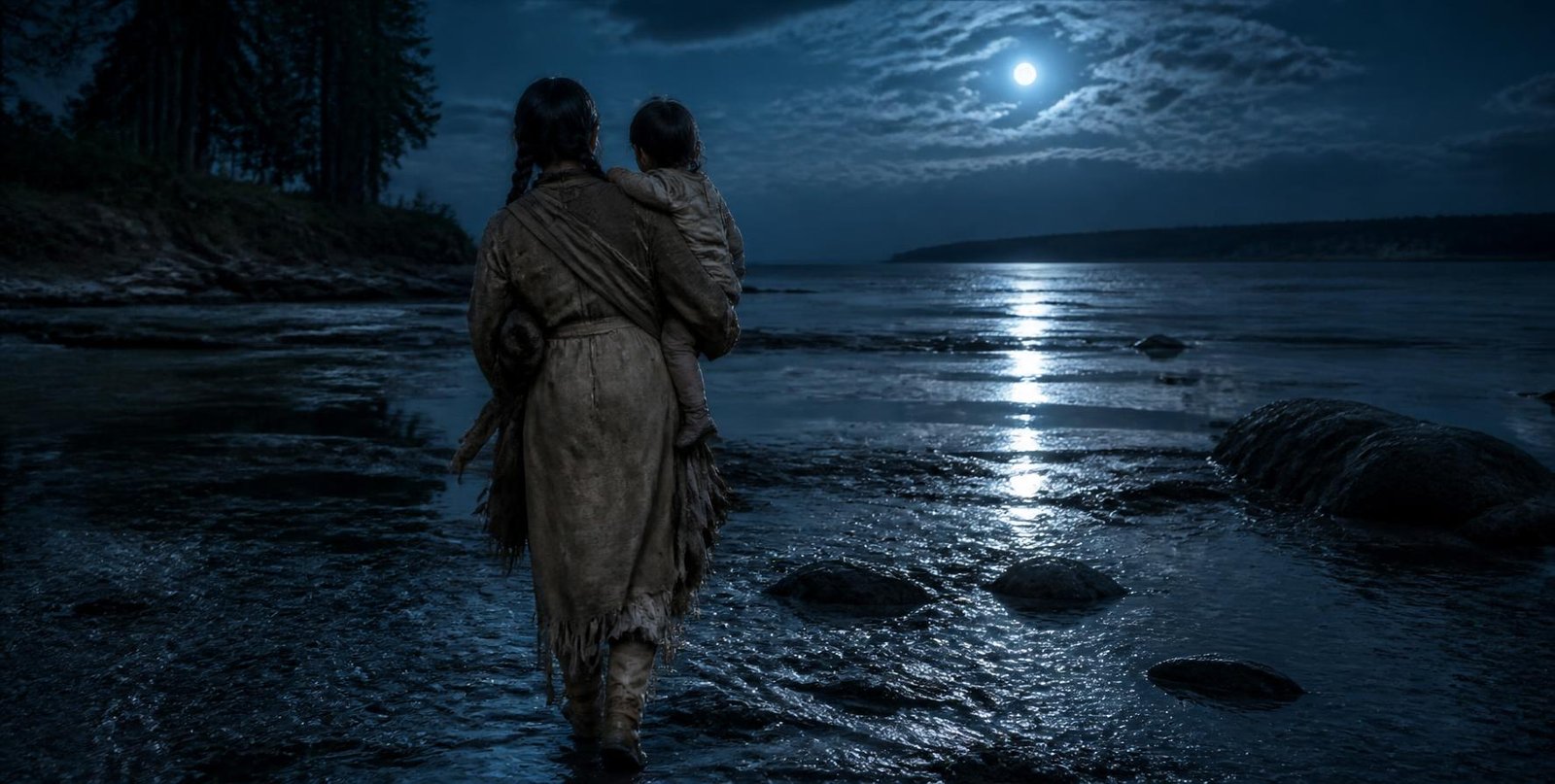
Some of these people were here as long ago as the last days of the Ice Age. Several thousand years ago, someone, probably a woman, hurried along the shores of ancient lake Otero, in modern-day New Mexico, carrying a toddler. She slipped now and then, the cold, slick mud oozing between her toes, switching the child from one hip to the other. Several times she tried letting him walk on his own, but never for more than a few steps. Perhaps the toddler cried and refused to walk, or maybe he wouldn’t walk fast enough. Either way, she picked him up again and struggled on, making her way across the broad, windswept valley that divides the Sacramento Mountains from the San Andreas Mountains.
After she passed by, a giant sloth lumbered up to her path. It stood on its hind legs, hairy and huge, like a cross between a fat grizzly and a furry anteater, and sniffed the wind, slow calculations shaping in its dense brain. The sloth must have decided the woman was dangerous, its destination not important enough to risk crossing paths with her. It dropped to all fours and waddled off again the way it had come.
Later, a wooly mammoth came across the footprints. It passed by without so much as a pause, leaving circular marks in the soft mud like small potholes.
After a while, the woman returned, still hurrying, even after her walk of more than a mile, still carrying the child. They passed by together and made their way off the mud flats.
Time passed. The Ice Age came to a climatic close with a mass extinction of over 70% of the large animals in North America. Gone were the horses, camels, giant sloths, and saber-toothed cats. Across Alberta, Canada, Montana, and other states, people erected “Medicine wheels” or wood henges.
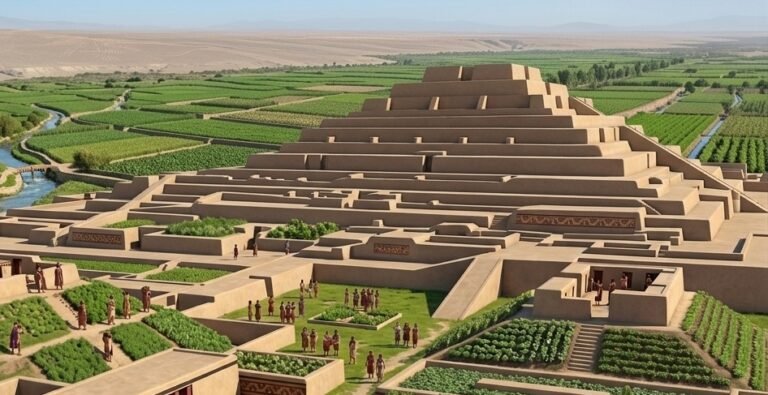
In the upper left corner of modern-day Mississippi, by the banks of Bayou Marcon, a now-forgotten people burned a swath in the grassland and raised a 72’ mound on the charred grass. In front of the mound, they laid out a new city on concentric half circles mounds, wrapping around a central plaza dotted with large circular timber structures.
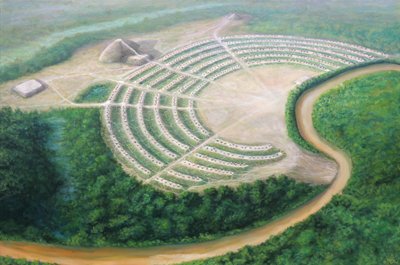
They weren’t the only ones building mounds. In the years that followed, mound-building civilizations flourished across the Eastern United States, leaving tens of thousands of mounds from Minnesota to Louisiana, and from Kansas to Virginia.
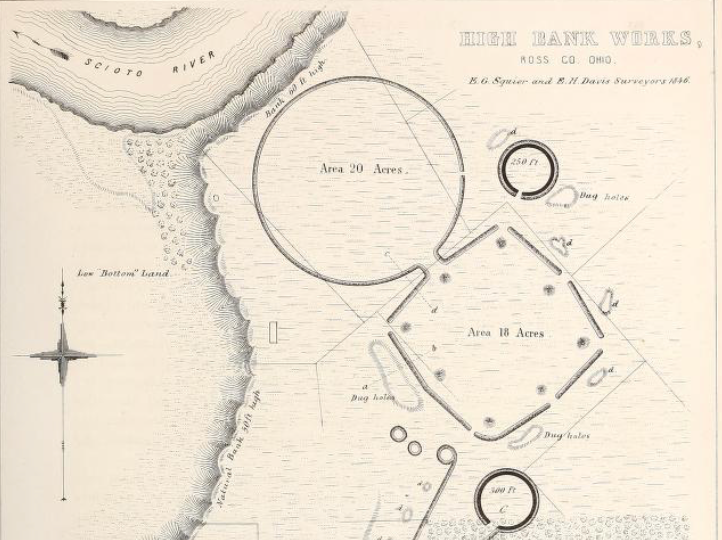
They had an incredible knowledge of astronomy, and not just the summer and winter solstices. The Newark Earthworks in Ohio were built to align with the 18.6 year cycle of the moon. May I point out that only a small percentage of us are even aware that the moon has a 18.6 year cycle? These people were not only aware of it, but mustered up enough enthusiasm to move an amount of dirt equal to the volume of 177 40ft shipping containers to better track its movements.
I wish I could give you an idea of the size of the earthworks they created. Entire amphitheaters of earth, with an inner mounds that in some cases may have originally stretched for more than 50 miles in length. 1
And they loved smoking a good pipe. In one large mound, which scientists believe was used as a crematorium, and some fringe groups called an “altar”, scientists found the remains of over 200 pipes. Most of these pipes, pictured below, were dug up in the 1800’s, carefully documented, sold to museums in Europe and lost to history.
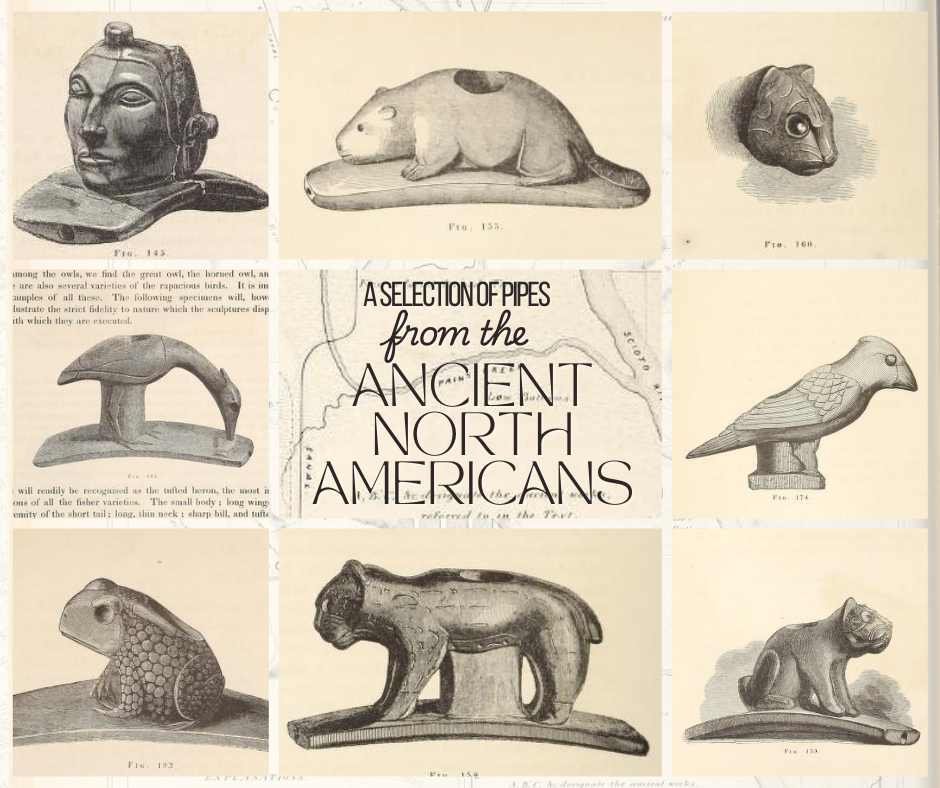
What do the woman on the shores of Lake Otero, the men who built the “medicine wheel” in Wyoming, and the pipe-smoking Hopewell people have in common?
They all went extinct before AD300. Gone. Wiped. Lost to history, no written record to chronicle their rise and fall, the last of their cities crumbling into dust.
Of course, the big question here is how do we know they all died off? How do we know the Hopewell people didn’t gradually become the Native Americans (who, by the way, built some incredible mound cities of their own)?
I’m so glad you asked!
Y-DNA is a chromosome found only in males. (Yes, even in 2025). It’s not like the kind you tested with 23andMe, or Ancestry DNA testing. This kind of DNA can’t tell you diddly-squat about your mom’s folks, but it can tell men about their father, his dad, and his father’s father, and so on, back through the male line into the mists of history. It’s an exact copy, handed down from father to son with every generation.
Theoretically.
In actuality, tiny mutations mean that it’s not an exact copy. And recently, we have been able to calculate how many mutations occur between generations. Now we can count the number of mutations, divide by generations, and arrive at some cool conclusions, like how long ago the first man lived, or when two populations split. Lots of cool science goes into these calculations, all of which I shall reference in the footnotes, trusting in your ability to wade through my sources if you want more deets.
Every Native American male alive today who has been tested shows a Y-DNA that split off from the Central Asians after AD 300. In fact, most northern tribes are descendants of a group that split off after AD700.
Which means, effectively, that everything built prior to 300AD was built by someone else. Someone whose entire male population was erased, either by disease, conquest, famine, or a mix of those elements. (As is so often the case in history, it looks like some women did survive—mostly likely the young pretty ones. Modern day Native Americans do share some micondiral DNA passed down from these women.)
But who were they?
It looks as though the first North American people came out of Asia a very long time ago. So while they might not be the ancestors of any modern population, they were the cousins of the modern-day Native Americans—and a huge chunk of Europeans.
For which you can thank Genghis Khan and the Black Death. When the Mongols invaded Europe, they—ahem—left a lot of DNA behind. And the theory goes that their descendants were more resilient to the Black Death—which also originated in Asia, than the rest of the population. The result? A lot of Europeans with Mongol forefathers. The very same Mongols whose forefathers were also the forefathers of the American Indians. And the ancient “Paleo-Americans.” (While we’re on the subject, I might as well point out the obvious; some Europeans, Asians and Native Americans might be the closest cousins to the ancient Americans, but if you are from any other people group, like Africans, for instance, you are still cousins. You just have to go back a little further.)
The woman carrying a toddler during the last days of the Ice Age? She wasn’t that different from you. In fact, you could be one of her closer living relatives. And although farmers’ plows and modern developments have destroyed most of their cities, and the few remaining are hundreds of miles away from where I live in the PNW* the human history of this continent isn’t so young after all.
Sources not already linked above:
1. Lynott, Mark J. Hopewell Ceremonial Landscapes of Ohio, p. 86
Ancient Monuments of the Mississippi Valley
They Had Names, Tracing the History of North American Indigenous Peoples by Nathaniel Jeanson
*She said bitterly.